


Back to Latest News
Blog - How to improve particle size consistency in Formulation Development
Repeatability and reproducibility are key
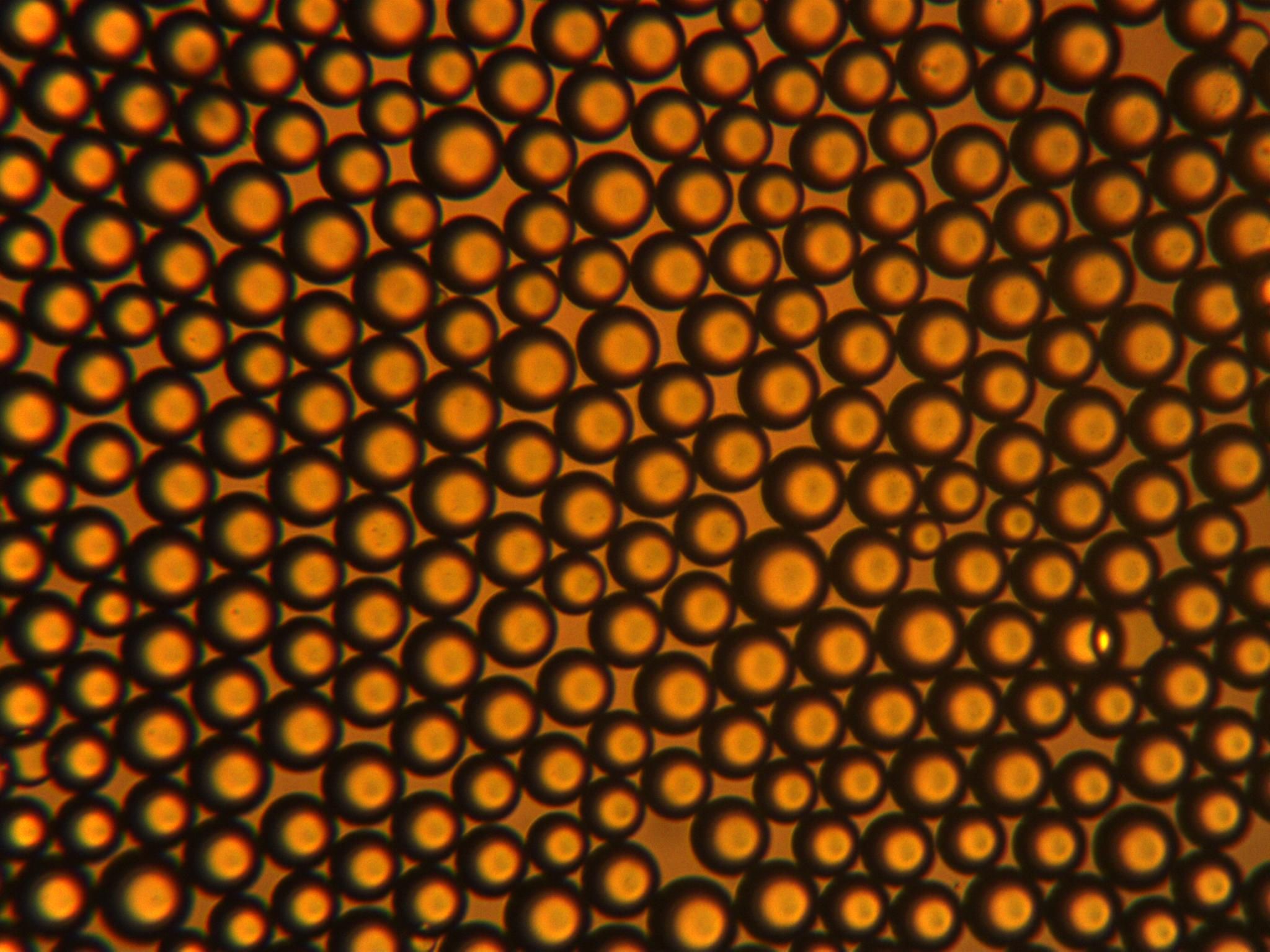
In formulation science, average particle size only provides part of the picture. The critical indicator of product quality, stability, and functional performance is the particle size distribution (PSD) curve.
High polydispersity introduces severe process and product risks. When particle sizes vary significantly within a single batch, it leads to unpredictable active ingredient release profiles, accelerated phase separation, and frequent quality control (QC) failures.
Achieving a highly reproducible, narrow PSD requires shifting away from traditional, unpredictable droplet break-up methods toward controlled, low-shear droplet generation
Why Conventional Processing Struggles to Control Particle Size Distribution
Maintaining precise particle size control is inherently difficult with conventional mixing technologies due to how they apply energy to a fluid.
High-shear mixers and homogenisers rely on turbulent flow and intense shear forces to break down droplets. Because the high shear area in the vessel is concentrated into a relatively small volume, some particles become over-processed into ultra-fines, while others remain too large. This droplet formation method inherently widens the PSD, leading to batch-to-batch inconsistency.
Microfluidic systems achieve an exceptionally narrow PSD at the bench by forming droplets one by one. However, because this architecture cannot handle industrial throughput, scaling up typically requires changing the underlying manufacturing method - which completely alters the fluid dynamics and causes the PSD curve to widen at the pilot stage.
Narrowing the Distribution via Crossflow Technology
To improve particle size consistency, the manufacturing process must move from random droplet breakage to engineered, uniform droplet generation.
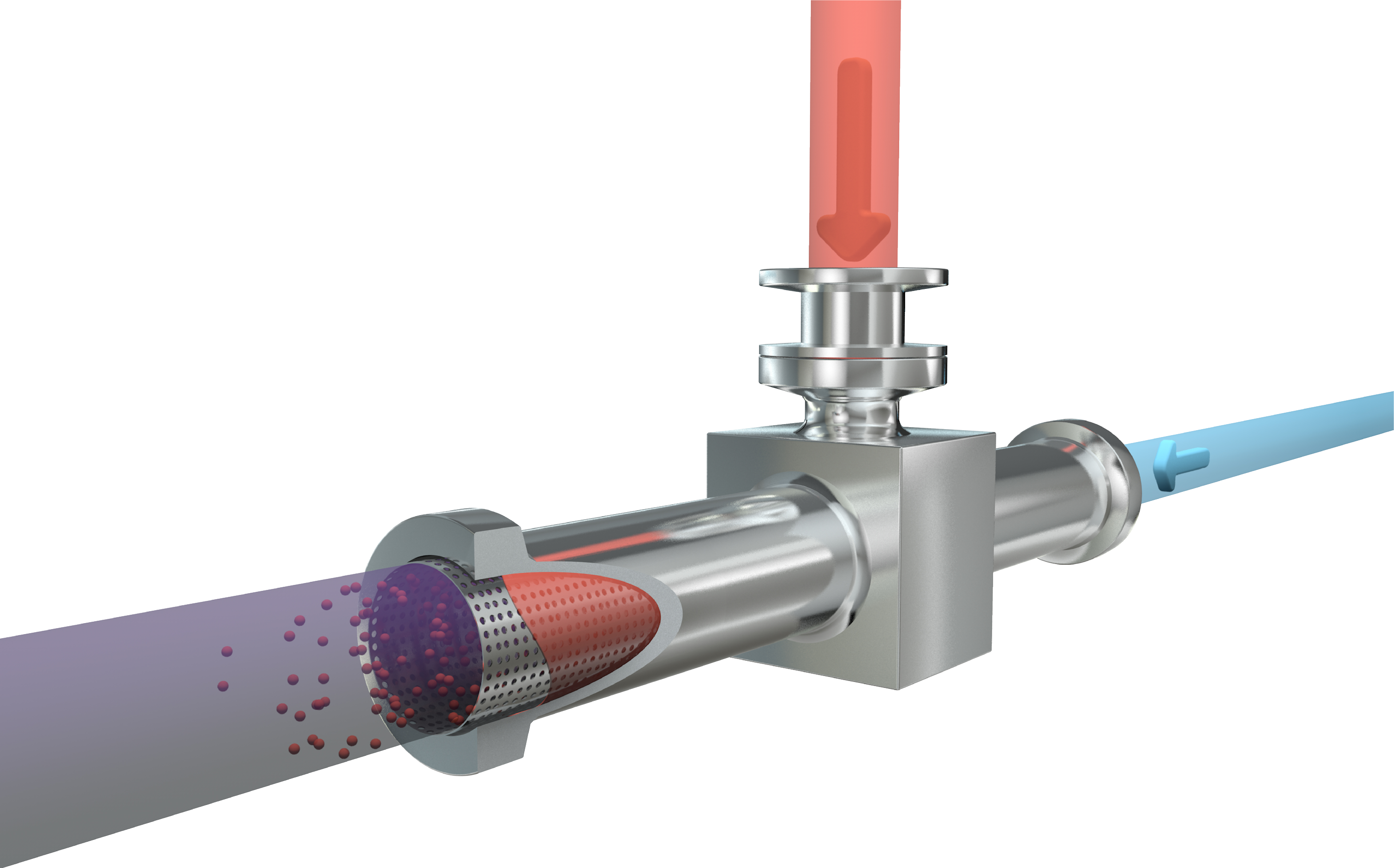
This is where advanced crossflow processing offers a mechanical alternative. By replacing turbulent shear with a controlled crossflow environment, droplets are allowed to form uniformly under highly predictable conditions before being cleanly detached. Because every single droplet is subject to the identical, low-shear force as it forms, the process directly optimises the PSD curve.
This methodology provides three distinct technical advantages:
- Uniform droplet generation tightens the distribution curve, eliminating both ultra-fines and oversized droplets to ensure a highly predictable release profile.
- A narrow PSD enhances emulsion stability and minimises phase separation, significantly improving shelf-life without requiring excessive stabilising agents or over-formulation.
- Because a tight PSD is achieved using minimal energy input, sensitive active ingredients and volatile components are protected from thermal and mechanical degradation.
Replicating the PSD Curve at Scale
Achieving precise particle size control in a laboratory setting is only useful if the distribution curve can be replicated during scale-up. Traditionally, increasing volume meant transitioning to larger vessels with entirely different geometry, which alters the shear profile and ruins particle size consistency.
Micropore’s Advanced Crossflow (AXF™) technology addresses this scalability gap by keeping the core droplet-formation mechanics identical from early-stage R&D through to full production.
By using the same membrane geometries at both laboratory and production scale, HORIZON™ maintains the same underlying droplet formation mechanism as processes scale. This enables formulation teams to scale from development to production while maintaining a consistent, narrow particle size distribution, reducing process redesign risks and regulatory uncertainty.
Get in touch to learn more about how Micropore Technologies can optimise your particle size distribution: https://microporetech.com/

Need a formulation challenge solved? Ask a Micropore expert
At Micropore we enjoy working in partnership with our clients to solve formulation challenges and deliver the highest performing, most sustainable, most cost-effective formulated delivery systems.


Stay Informed
Keep up to date with innovations at Micropore. Sign up today to stay informed with innovations at Micropore and automatically receive the Micropore newsletter and webinar invites.
Quick Links
Contact
Micropore Technologies
Europe, Middle East, Asia: +(44) 1642 438367
Americas & Canada: +(1) (205) 639 3730
Terms of Use
Accessibility